

Small ethical lapses can trigger major career fallout. Discover how workplace ethics, integrity, compliance, and professional reputation shape long-term career growth in today’s business world.
In the modern workplace, careers are not built on performance alone. They are built on trust, credibility, integrity, and consistency. One missed disclosure, one manipulated number, one half-truth in a client conversation, or one convenient shortcut may seem minor in the moment. But small ethical lapses have a way of growing into big professional consequences.
Today, as businesses place greater focus on workplace ethics, compliance culture, transparency, AI governance, and accountability, ethical behaviour is no longer seen as a “soft” value. It is a core leadership asset and a serious career differentiator. Current workforce and reporting discussions continue to emphasise trust, transparency, and responsible conduct as business priorities.
Most career damage does not begin with a dramatic scandal. It starts quietly.
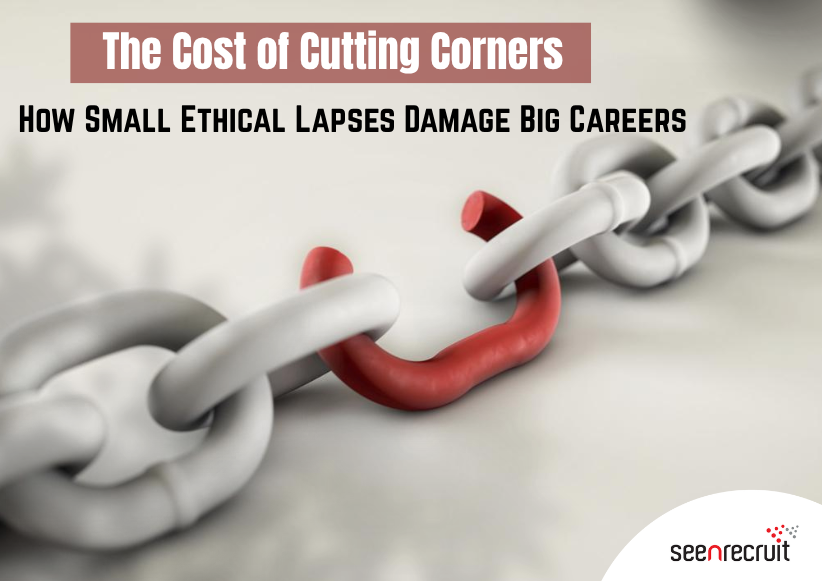
These actions are often rationalized as harmless, temporary, or necessary to get results. But ethics rarely break all at once. It erodes in layers.
These actions are often rationalized as harmless, temporary, or necessary to get results. But ethics rarely break all at once. It erodes in layers
And once that perception forms, it becomes difficult to reverse.
Ethical lapses do not always lead to instant termination. In many cases, the damage is slower and more lasting.
One of the biggest myths in the corporate world is that results can excuse behavior. They cannot.
A top performer who cuts corners may survive longer than others, but the long-term risk is often even greater. Why? Because senior professionals and high-potential employees are expected to set the tone. The higher the role, the greater the visibility. And the greater the visibility, the higher the ethical standard.
For leaders, ethics is not just personal conduct. It becomes a cultural influence.
When a manager ignores process, manipulates data, or behaves unfairly, teams notice. Over time, that behavior spreads. This is how ethical drift enters organizations—and how careers that once looked promising begin to collapse from the inside out.
The strongest professionals are not only smart or ambitious. They are trusted under pressure.
Ethical leadership does not mean perfection. It means consistency.
Professionals who are transparent, accountable, and principled often become the people organizations rely on during moments of uncertainty. And in today’s business climate, those are the careers that tend to last.
Ethical lapses are not always caused by bad intent. Sometimes they come from stress, speed, pressure, competition, or fear. That is why professionals need active guardrails.
A useful question to ask is:
Would I be comfortable if this decision were reviewed publicly by my manager, client, or team?
If the answer is no, it is usually a warning sign.
The cost of cutting corners is rarely immediate—but it is almost always expensive.
In the short term, a small ethical lapse may save time, reduce discomfort, or create the appearance of success. In the long term, it can damage credibility, weaken trust, stall growth, and derail leadership potential.
Careers are not only defined by big achievements. They are also shaped by the small decisions made every day.
Because in the end, people may admire talent. But they promote trust and remember integrity.